
Hot and cold bathing works. The research on heat and on cold exposure is better than most people realise, and the effects are large enough that you feel them the first time. What follows is what the evidence actually supports, where it's strong, and where the popular version has run ahead of it.
What cold water actually does
Getting into cold water produces an immediate and dramatic response. You gasp involuntarily, your breathing rate spikes, blood vessels at the surface clamp down, blood pressure rises and your heart works harder. Underneath that, cold exposure triggers a large release of noradrenaline and related catecholamines — and this is the part people feel most clearly.
The lift in mood and alertness after cold water is one of the more reliable effects in this whole area. It arrives fast, it lasts well beyond the exposure, and it does not require you to stay in for long or get the temperature exactly right. If you only take one thing from cold water, that's the one that most consistently shows up.
For soreness and recovery
The best-supported recovery claim for cold water immersion is that it reduces how sore you feel in the days after hard exercise. That effect turns up repeatedly, and it's genuinely useful — feeling less wrecked on day two means you train again sooner and enjoy it more.
Be clear about the boundary of that claim, though. Reduced perceived soreness is not the same as demonstrated faster tissue repair, reduced injury risk, or improved performance in your next session. The evidence gets much thinner as you move from “feels less sore” to those stronger claims.
The caveat that matters if you lift
If your goal is muscle or strength, don't cold plunge straight after resistance training. There is reasonable evidence that cold water immersion immediately following lifting blunts some of the signalling that drives strength and hypertrophy adaptation. In other words, the inflammation you're suppressing is partly the inflammation you were training to provoke.
The fix is trivial. Put several hours between lifting and cold water, or use cold on rest days and after endurance work. Heat is a different story and doesn't carry the same concern. This is the single most useful non-obvious thing on this page, and most places selling cold plunges won't mention it.
If you're not training for hypertrophy — if you plunge because of how it makes you feel, or you're recovering from a long run, or you just like it — this barely applies to you. Timing only matters when adaptation is the point.
Contrast therapy: what we can and can't say
Alternating hot and cold produces repeated vasodilation and vasoconstriction, which is often described as pumping blood through peripheral tissue. The physiology is real and easy to measure.
Whether contrast beats heat alone or cold alone for recovery outcomes is genuinely unsettled. The studies are mostly small, protocols vary wildly, and results are mixed. Our honest position: contrast bathing is well tolerated, most people find the alternation far more pleasant and easier to sustain than either extreme on its own, and the subjective recovery benefit is real. We're not going to tell you the literature has established it as superior, because it hasn't.
None of which is a reason to skip it. Alternating is more pleasant than either extreme held alone, it's far easier to sustain for an hour, and the subjective recovery effect is consistent enough that we'd back it against most things you could do with the same ninety minutes.
The magnesium pool, and what the research shows
Magnesium bathing gets dismissed as marketing, and that dismissal is lazier than the claims it's attacking. There is real dermatological research here.
A study published in the International Journal of Dermatology in 2005 had participants bathe in a magnesium-rich Dead Sea salt solution and measured what happened to their skin. It found improved skin barrier function, better skin hydration, reduced skin roughness and reduced inflammation in atopic dry skin, compared with bathing in ordinary tap water. Peer-reviewed dermatology journal, measured outcomes, magnesium-rich water — which is exactly what our mineral pool is.
So magnesium bathing does something measurable, and it does it to the organ that's actually in contact with the water. If your skin is dry, tight, or irritated by chlorinated pools, this is the part worth knowing.
What's less settled is the systemic story — the idea that a soak loads meaningful magnesium into your bloodstream and tops up a deficiency. Some of the most-quoted evidence for that is unpublished or industry-funded, and we're not going to lean on it, because we don't have to. The skin effects are documented, and the reason people book the mineral pool again is simpler than either argument: the water is dense and buoyant, it holds you up, it's warm without being hot, and it feels nothing like a swimming pool.
A circuit that works
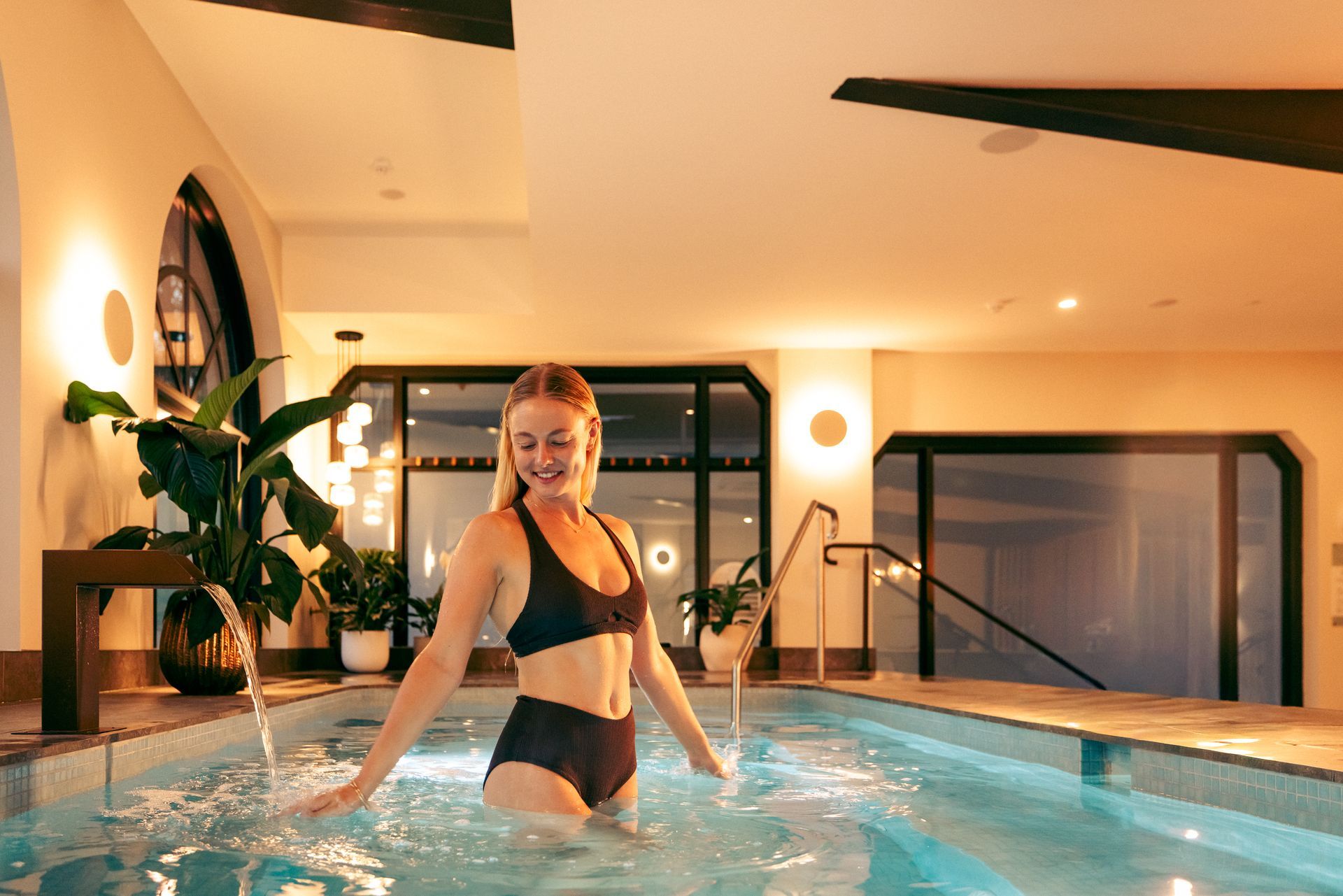
| Step | Duration | Notes |
|---|---|---|
| Warm shower | 2–3 min | Rinse off, start raising skin temperature. |
| Sauna or steam | 10–15 min | Properly hot, not heroic. Lower bench if needed. |
| Cold plunge | 30 s – 2 min | In slowly. Control the first few breaths. Head stays up. |
| Rest | 5–10 min | Sit, drink water, let heart rate settle. Don't skip. |
| Repeat | 2–4 rounds | Stop when it stops feeling good. |
| Finish | — | End cold to feel alert; end with a warm soak to feel sleepy. |
Ninety minutes fits three rounds and a soak without rushing. Two hours means you stop thinking about it.
For runners and endurance athletes
Endurance work is where cold immersion sits most comfortably, because the adaptation concern that applies to lifting is much less of an issue. After a long run or a hard interval session, cold water for a minute or two, followed by heat and a rest, is a reasonable and pleasant way to feel less battered the next day.
We run a Friday morning run club recovery session for exactly this reason — run first, then use the facilities properly rather than dashing through a two-minute ice bath and calling it recovery.
Sleep and winding down
An evening bathing session is one of the more reliably pleasant uses of a bathhouse. Passive heating followed by cooling brings your core temperature down in a way that mirrors what happens naturally as you fall asleep, and the evidence for warm bathing before bed is reasonably supportive.
If sleep is what you're after: finish with the warm mineral pool rather than the cold plunge, keep the last cold exposure earlier in the session, and leave an hour or two before bed. Ending on cold is energising, which is excellent at 7am and unhelpful at 9pm.
Things we're not going to claim
- Detoxification. Sweat is water and electrolytes. Your liver and kidneys do the actual work and they don't need help from a hot room.
- Fat loss. Cold exposure does activate brown fat, and the effect on body composition in humans is small enough that presenting it as a weight loss strategy would be dishonest.
- Immune boosting. Popular, and not reliably demonstrated.
- Treating conditions. We're a bathhouse. We're not treating your injury, your illness or your chronic pain, and anyone in this industry telling you otherwise is selling something.
- Systemic magnesium repletion. The skin research is solid and we've covered it above. Fixing a dietary magnesium deficiency by sitting in a pool is a different claim, and that one isn't established.
The bathing landscape, and where we sit in it
“Bathhouse” now covers venues with very little in common, which makes it hard to work out what you're actually booking. The categories break down like this.
Urban bathhouses
Heat, cold and warm soaking under one roof in a city, sold as a block of time rather than a treatment, and priced to be a habit rather than an occasion. You come for 60 to 120 minutes, you use the rooms in whatever order you like, and nobody instructs you. This is what we are — Escape Bathhouse in Chatswood, with a traditional sauna, steam room, cold plunge pools and the magnesium mineral pool.
Recovery studios
Smaller and more targeted, usually built around specific modalities — float tanks, infrared saunas, compression, massage — booked as a discrete session. City Cave has taken this model national across Australia and is the most recognisable example. Good fit if you want a focused 45 minutes with a clear purpose, less so if you want to disappear for two hours.
Membership clubs
Bathing folded into a broader high-end membership alongside training, treatment rooms and social space. Saint Haven in Melbourne is the clearest Australian example of the format. It's a different proposition to a bathhouse: you're buying ongoing access and belonging rather than an individual session, at a commitment level to match.
Thermal spring destinations
Built on natural geothermal water, almost always regional, and worth planning a day or a weekend around rather than dropping into after work. Peninsula Hot Springs on Victoria's Mornington Peninsula is the best known in Australia. Hepburn Bathhouse & Spa at Daylesford sits on mineral springs that have been bathed in since the nineteenth century, and Metung Hot Springs in Gippsland is a more recent addition to the same category.
The international institutions
If you get the taste for this, these are the ones worth building a trip around: Széchenyi and Gellért in Budapest, Friedrichsbad in Baden-Baden, Therme Vals in the Swiss Alps, Thermae Bath Spa in Bath, the Blue Lagoon and Sky Lagoon in Iceland, the onsen towns of Hakone and Beppu in Japan, the jjimjilbang of Seoul, and the historic hammams of Istanbul.
What this list isn't. It's a map of categories, not a ranking, and not a complete guide to bathing in Sydney. We run a bathhouse — we're the last people who should be scoring the competition, so we haven't tried. If you want a full picture of your Sydney options, search properly and read reviews that aren't on a bathhouse's own website. We've named these places because knowing the categories helps you pick the right kind of venue, and because some of them are genuinely worth the airfare.
Safety, properly
Contrast bathing asks a lot of your cardiovascular system in a short window. Most healthy adults handle it easily. Some shouldn't do it without advice.
- Heart conditions, arrhythmias, uncontrolled blood pressure — the hot-to-cold transition is the demanding part. Talk to your doctor first.
- Pregnancy — get advice before heat bathing, particularly early on.
- Never after alcohol. It impairs temperature regulation and judgement at exactly the moment both matter.
- Head above water in cold. The involuntary gasp reflex plus submersion is how cold water kills people.
- Never plunge alone in an unsupervised setting.
- Stand up slowly after heat. Most incidents in bathhouses are simple faints from standing too fast.
Questions people actually ask
What is contrast therapy?
Alternating between hot and cold exposure in the same session — typically several minutes of heat, then a short cold immersion, repeated a few times. The idea is that repeated vasodilation and vasoconstriction acts as a kind of pump on peripheral circulation. The physiological response is real and measurable; whether it produces better outcomes than heat or cold alone is less settled than most marketing suggests.
How cold and how long should a cold plunge be?
Most studies of cold water immersion for recovery use water somewhere around 10 to 15°C for roughly 10 to 15 minutes, though plenty of real-world practice uses colder water for much shorter periods. For general use, one to three minutes in cold water is plenty, and under a minute still does something. Longer and colder is not automatically better, and it raises the risk side of the ledger.
Does cold water immersion help sore muscles?
For perceived soreness in the days after hard exercise, this is one of the better-supported effects — people who cold plunge after intense training generally report feeling less sore. Note what that claim is: it's about how sore you feel, which is genuinely valuable, and it's not the same as demonstrating faster tissue repair or better subsequent performance.
Should I cold plunge after lifting weights?
Probably not straight afterwards, if building muscle or strength is your goal. There's reasonable evidence that cold water immersion immediately after resistance training blunts some of the adaptive signalling that drives hypertrophy and strength gains over time. The practical fix is easy: leave several hours between lifting and cold immersion, or use it on rest days and after endurance sessions instead. If you're plunging for how it makes you feel rather than for adaptation, this matters much less.
Why does cold water make me feel so good afterwards?
Cold exposure produces a large, sharp rise in noradrenaline and other catecholamines, and most people experience that as a distinct lift in alertness and mood that outlasts the exposure itself. This is one of the more reliable and least oversold effects of cold water — it's also why people get slightly evangelical about it.
Is a magnesium mineral pool different from a normal pool?
Yes, in two ways. It feels different — denser, more buoyant, and much softer on skin and eyes than heavily chlorinated water. And it measurably does something: a 2005 study in the International Journal of Dermatology found that bathing in a magnesium-rich salt solution improved skin barrier function and hydration and reduced skin roughness and inflammation in atopic dry skin, compared with ordinary tap water. If chlorinated pools leave your skin tight and irritated, that difference is the whole point. The claim we won't make is the systemic one — that soaking corrects a magnesium deficiency. That's a separate and much less settled question.
How should I structure a recovery session?
A reasonable circuit: 10 to 15 minutes of heat, 1 to 2 minutes cold, then a few minutes of rest, repeated two to four times, finishing on cold or with a warm soak depending on whether you want to feel alert or sleepy afterwards. Ninety minutes fits three rounds comfortably.
Will hot and cold bathing help me sleep?
Many people find an evening session leaves them sleeping better, and the mechanism is plausible — passive heating followed by cooling accelerates the drop in core temperature that normally accompanies falling asleep. The evidence for warm bathing before bed is reasonable; for full contrast protocols it's thinner. If sleep is your goal, finish warm rather than cold, and leave an hour or two before bed.
Is cold water immersion safe?
For healthy adults, in supervised waist-to-chest-deep pools, generally yes. The risks worth knowing: the initial cold shock response causes involuntary gasping and hyperventilation, which is dangerous if your head goes under; cold raises blood pressure and cardiac workload sharply, which matters if you have a heart condition; and prolonged immersion impairs coordination. Never cold plunge alone in an unsupervised setting, never after drinking, and check with your doctor first if you have cardiovascular issues.
What’s the difference between a bathhouse and a recovery studio?
Scale and intent. A recovery studio is built around specific modalities — float tanks, infrared saunas, compression — booked as a focused session with a purpose, often 45 minutes. A bathhouse sells you a block of time in a set of hot and cold rooms and lets you use them however you like, usually for 60 to 120 minutes. Studios are better for a targeted fix; bathhouses are better when the point is to stop being efficient for a while.
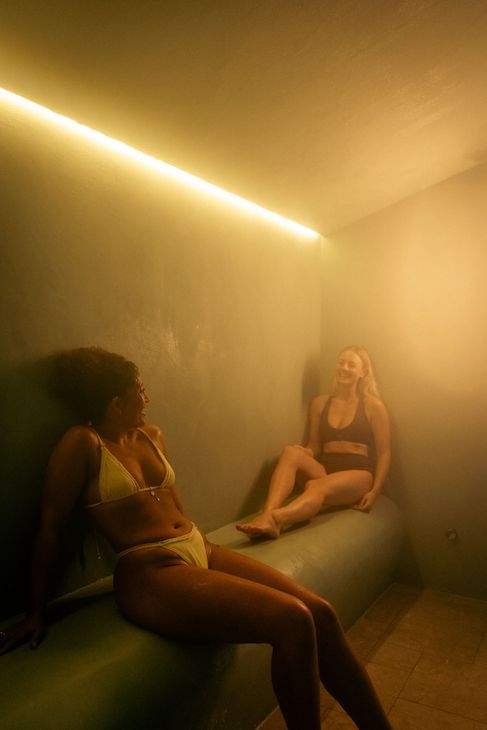
Recovery at Escape Bathhouse
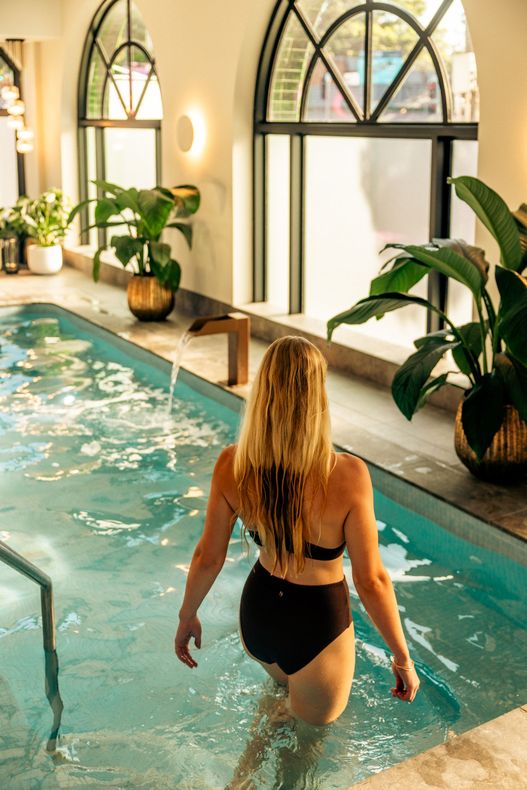
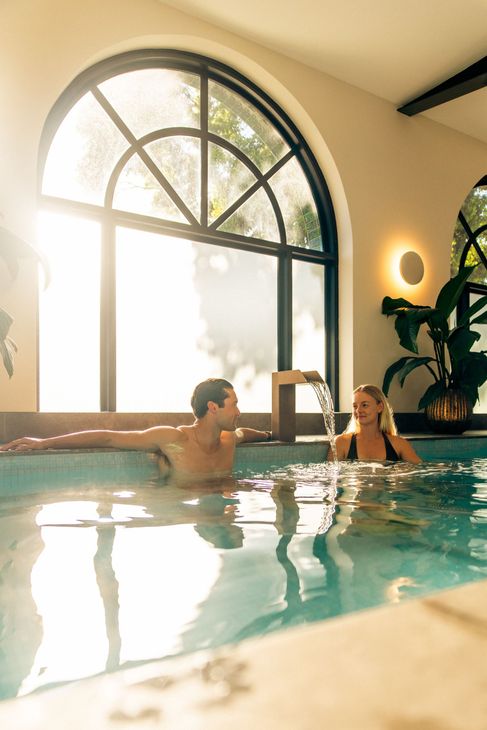
Cold plunge pools, traditional sauna, steam room and a warm magnesium mineral pool in Chatswood — with sessions long enough to run a proper contrast circuit rather than a token dip. We also run a Friday run club recovery session and offer remedial massage.
989 Pacific Highway
Chatswood NSW 2067
60, 90 and 120 minutes
from $39
Tue–Sun from 7am
(Sun 8am). Closed Mon.